
Table of Contents
ToggleWhen Bethesda ported The Elder Scrolls V: Skyrim to the Nintendo Switch back in 2017, it felt like a fever dream, a massive, open-world RPG running on a handheld device. Fast-forward to 2026, and the question isn’t whether Skyrim belongs on Switch (it absolutely does) but how well it’s aged compared to more modern ports and whether it’s still worth picking up today.
This review digs into every aspect of Skyrim’s Switch version, from graphics and performance to content, controls, and portability. Whether you’re a newcomer curious about exploring Tamriel or a veteran wondering if the Switch version is the definitive way to play on-the-go, we’ve got you covered.
Key Takeaways
- Skyrim Switch review confirms that portability is the version’s defining strength, allowing players to experience the full RPG on flights, commutes, and handheld mode without compromise.
- All three major DLCs—Dawnguard, Hearthfire, and Dragonborn—are included standard, providing 100+ hours of complete content out of the box.
- The Skyrim Switch version targets 30 FPS with occasional dips in dense areas and runs at 900p docked or 720p handheld, making handheld mode the superior visual experience.
- Nintendo-exclusive Amiibo support unlocks Legend of Zelda gear including the Master Sword and Champion’s Tunic, adding charming crossover content unique to the Switch platform.
- Zero mod support remains the biggest limitation compared to PC and other console versions, restricting players to the vanilla experience without community enhancements.
- The Switch version justifies its existence for newcomers to Skyrim and players who prioritize handheld flexibility, though it’s not the best choice for those demanding maximum performance or graphical fidelity.
What Makes Skyrim Special on the Switch?
Portability changes everything. The ability to grind levels during a commute, tackle side quests in bed, or explore dungeons on a flight transforms Skyrim from a couch-bound time sink into something far more dangerous: a game that follows you everywhere.
The Switch version includes all three major DLCs, Dawnguard, Hearthfire, and Dragonborn, right out of the box. That’s hundreds of hours of vampire hunting, homesteading, and dragon-riding packed into a cartridge or digital download. For players who missed the original 2011 release or skipped the Special Edition remasters on other platforms, this is the complete Skyrim experience without needing to hunt down expansion passes.
But what truly sets the Switch version apart is its Nintendo-specific features. Motion controls let you swing swords and aim bows with Joy-Con gestures, and Amiibo support unlocks exclusive Legend of Zelda gear, yes, you can dress the Dragonborn in Link’s tunic and Master Sword. These additions feel less like gimmicks and more like Nintendo putting its own fingerprint on a Western RPG classic.
The real magic, though, is in the moments between major quests. Skyrim thrives on emergent storytelling, stumbling into a giant’s camp, getting ambushed by a dragon mid-fast-travel, or accidentally starting a questline because you picked up the wrong book. Having that spontaneity available in handheld mode, without needing to boot up a console or PC, makes the Switch version uniquely compelling even in 2026.
Graphics and Performance: How Does It Hold Up?
Visual Quality and Resolution
Let’s be honest: Skyrim on Switch isn’t going to blow anyone away with cutting-edge visuals. The game is based on the 2016 Special Edition remaster, which itself was a graphical update of a 2011 title. Compared to the PC version running high-res texture packs or even Skyrim on Xbox with enhanced lighting, the Switch version makes compromises.
In docked mode, Skyrim runs at 900p resolution, which is noticeably softer than 1080p but still clean enough on most TVs. Textures are middling, acceptable for environmental details like rocks and trees, but character models and armor can look muddy up close. In handheld mode, resolution drops to 720p, which actually looks sharp on the Switch’s 6.2-inch screen. The smaller display masks the lower-quality textures, and honestly, handheld mode is where this version shines visually.
Lighting and weather effects hold up surprisingly well. Sunsets over the Throat of the World still look gorgeous, and blizzards in the northern holds create genuine atmosphere. The Special Edition’s improved draw distance means fewer pop-in issues compared to the original PS3/360 versions, though distant objects can still flicker into view occasionally.
Frame Rate and Load Times
Skyrim on Switch targets 30 FPS, and it mostly hits that mark. In lighter areas like the plains of Whiterun Hold or smaller dungeons, performance is stable. But, dense forests around Riften, chaotic dragon battles, or crowded city hubs like Solitude can cause noticeable dips, sometimes down to the low 20s.
These frame drops don’t break the game, but they’re jarring if you’re coming from the 60 FPS experience on PC or recent console versions. Combat fluidity suffers the most: timing blocks and dodges in melee feels less responsive during slowdown.
Load times are decent but not spectacular. Fast-traveling between major cities takes 15-25 seconds, while entering large interior cells like Dwemer ruins can push 30 seconds. Installing the game to the Switch’s internal storage or a high-speed microSD card shaves a few seconds off, but don’t expect the near-instant loads of an SSD-equipped PC or PS5.
In 2026, these performance quirks are more forgivable than they were at launch. Skyrim isn’t a twitch shooter: it’s a methodical RPG where exploration and story matter more than pixel-perfect frame pacing. Still, if performance is your top priority, the Switch isn’t the platform to choose.
Gameplay Experience: Portability Meets Immersion
Handheld Mode vs Docked Mode
Handheld mode is the soul of the Switch version. Playing Skyrim on a plane, in a coffee shop, or sprawled on the couch without hogging the TV is transformative. The 720p screen hides visual shortcomings, and the compact form factor makes grinding alchemy or clearing bandit camps feel less like a commitment.
Docked mode, by contrast, feels like a compromise. At 900p on a large TV, the lower texture quality and occasional frame drops become more obvious. It’s functional, perfectly playable for long questing sessions, but it doesn’t compete with the visual fidelity or smoothness of other platforms. If you’re buying Skyrim exclusively for TV play, you’re better off with Xbox Series X
|
S or PC with mods.
That said, the seamless transition between modes is clutch. You can start a dungeon crawl docked, undock mid-battle, and continue without missing a beat. For households where TV time is contested or for players who value flexibility, this hybrid approach is a game-changer.
Controls and Motion Features
Traditional controls map well to the Switch’s button layout. The dual analog sticks handle movement and camera smoothly, face buttons manage menus and actions, and triggers cover attacking, blocking, and shouts. The only hiccup is the small size of the Joy-Cons in handheld mode, which can cramp hands during marathon sessions. A Pro Controller or grip accessory solves this for docked play.
Motion controls add a layer of immersion, or gimmickry, depending on your tolerance. Swinging a Joy-Con to attack or tilting to aim bows works surprisingly well in short bursts, and it’s genuinely fun to physically “shout” by jerking the controller forward. But precision suffers compared to analog aiming, especially against fast-moving enemies or in tight spaces. Most players will default to traditional controls after the novelty wears off.
Lockpicking with motion controls, though? That’s frustrating. The tactile feedback isn’t precise enough to feel the “sweet spot,” and it’s easier to just use the analog stick like on other platforms.
Overall, controls are solid but unremarkable. They don’t elevate the experience, but they don’t hinder it either, which is exactly what a port needs.
Content and Features: What’s Included?
DLC and Expansion Packs
The Switch version ships with the full Special Edition package, meaning all three major expansions are baked in:
- Dawnguard: Join the vampire hunters or become a Vampire Lord yourself. This DLC adds crossbows, new perks, and the Soul Cairn, a haunting afterlife realm that’s equal parts creepy and tedious.
- Hearthfire: Build custom homes, adopt children, and roleplay as a homesteading Dragonborn. It’s lighter on combat but beloved by players who enjoy the slower, domestic side of Skyrim.
- Dragonborn: Travel to the island of Solstheim, face off against the first Dragonborn, and unlock dragon-riding. This is the meatiest expansion, with a full questline, new shouts, and unique enemies.
You’re getting the same content that Xbox and PlayStation Special Edition owners enjoy, with no paywalls or missing features. For newcomers, this is the complete Skyrim experience in one purchase.
Amiibo Support and Nintendo Exclusives
Nintendo exclusivity comes in the form of Amiibo support and Legend of Zelda gear. Scanning select Amiibo (like Link from Breath of the Wild) unlocks chests containing:
- Master Sword: A one-handed blade with decent base damage and an iconic design.
- Hylian Shield: A shield with solid defense stats and the Triforce emblem.
- Champion’s Tunic: Light armor modeled after Link’s outfit.
These items aren’t game-breaking, they’re mid-tier gear at best, but they’re fan-service gold. Running around Skyrim cosplaying as Link is a novelty that never quite gets old, and it’s a fun nod to Nintendo’s flagship franchise.
There’s also a Legend of Zelda main theme that plays when you scan certain Amiibo, which is a nice touch for crossover fans. These exclusives won’t sell the game on their own, but they’re a charming bonus that other platforms can’t match.
Mod Support: The Missing Piece
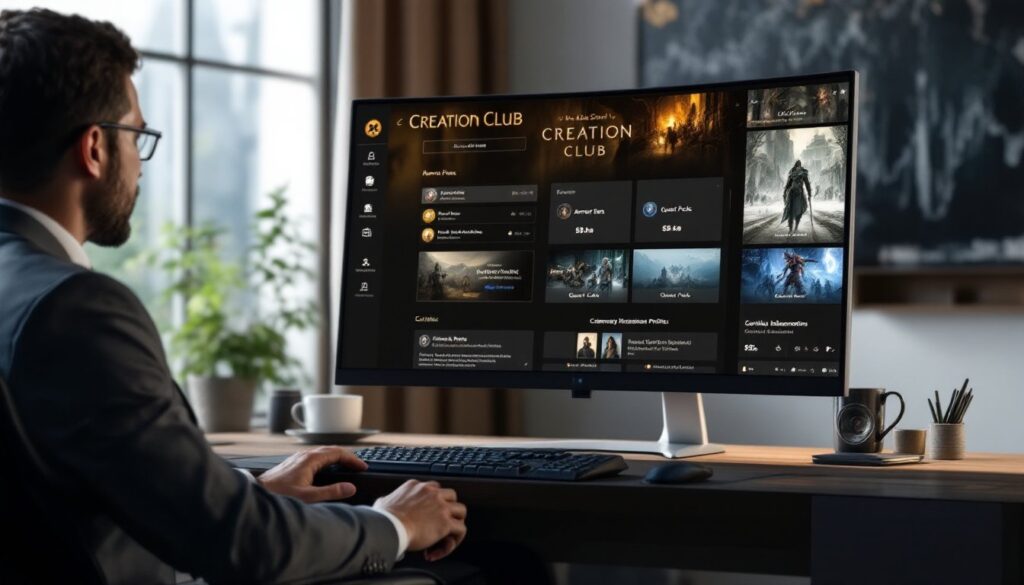
Here’s the biggest letdown: Skyrim on Switch has zero mod support. None. Not even the curated Creation Club mods available on Xbox and PlayStation.
Mods are what keep Skyrim alive on other platforms. Want better textures? Install a graphics overhaul. Bored of vanilla combat? Add new weapons, spells, or enemy AI. Craving new challenge runs with custom rules? Mods make it happen. The PC version in particular thrives on a modding ecosystem that’s been evolving for over a decade.
The Switch’s lack of mod support means you’re stuck with the vanilla experience, bugs, balance quirks, and all. Yes, the Special Edition patched many of the original’s game-breaking glitches, but minor issues persist. Followers still get stuck in doorways, physics objects can launch into orbit, and certain questlines remain jank.
For players who’ve never modded Skyrim, this isn’t a dealbreaker. The base game is still a 100+ hour epic. But for veterans who’ve tasted lighting overhauls or gameplay tweaks, the Switch version feels limited. According to RPG Site, the modding community remains one of the primary reasons Skyrim’s player base stays engaged years after release, a factor entirely absent here.
This omission is understandable from a technical standpoint (the Switch’s hardware and closed ecosystem make modding complicated), but it’s still a shame. Mod support could’ve made the Switch version the definitive portable Skyrim. Without it, it’s just a version of Skyrim, not the best one.
How Skyrim Switch Compares to Other Platforms
Let’s break down how the Switch version stacks up against other ways to play Skyrim in 2026:
PC: The gold standard. 60+ FPS, 4K textures, thousands of mods, and near-instant load times on modern hardware. The Switch can’t compete on raw performance or customization, but it also doesn’t require a gaming rig.
**Xbox Series X
|
S and PS5**: These versions benefit from backward compatibility enhancements, 60 FPS, faster load times, and mod support (though more limited than PC). They’re the best console experience, but they’re tethered to your TV.
Xbox One and PS4: Similar to Switch in resolution and frame rate, but with mod support. If you don’t care about portability, these are arguably better picks than Switch.
VR (PSVR, PC VR): Skyrim VR is a completely different beast, immersive and surreal, but hampered by finicky controls and motion sickness for some players. It’s a novelty experience, not a replacement for traditional play.
The Switch version’s unique selling point is portability. No other platform lets you play full-fat Skyrim on a plane, in a park, or during lunch breaks. If that flexibility matters to you, if you’ve got a commute, travel frequently, or just prefer handheld gaming, the Switch version justifies its existence. Reviews on GameSpot and other outlets consistently highlight portability as the deciding factor for potential buyers.
But if you’re choosing purely on performance, visuals, or mod potential, the Switch loses to almost every other option. It’s a trade-off, and your priorities will determine whether it’s the right one.
Who Should Buy Skyrim on Switch in 2026?
You should buy Skyrim on Switch if you:
- Prioritize portability above all else. If the idea of playing Skyrim on a flight, during a commute, or in bed excites you, this is the version to get.
- Own a Switch as your primary gaming device. If you don’t have a gaming PC or current-gen console, the Switch version is a perfectly viable way to experience Skyrim.
- Want the complete package without hunting down DLC. All expansions are included, so you’re getting the full experience out of the gate.
- Appreciate Nintendo crossover content. The Zelda gear and Amiibo features are small perks, but they add a unique flavor.
- Have never played Skyrim before. Newcomers won’t miss mods they’ve never tried, and the base game is still a masterpiece.
You should skip it if you:
- Already own Skyrim on PC, Xbox, or PlayStation and have no need for portability. There’s no reason to double-dip unless handheld play is essential.
- Demand 60 FPS or high-fidelity graphics. The Switch’s 30 FPS cap and lower resolution will feel sluggish and blurry compared to modern versions.
- Rely on mods to enjoy Skyrim. The lack of mod support is a dealbreaker for many veteran players who’ve customized their experience.
- Want the best-looking or smoothest version. Other platforms offer superior performance and visuals.
In 2026, Skyrim on Switch is a niche pick. It’s not the best version graphically or mechanically, but it’s the most convenient. If portability aligns with your gaming lifestyle, it’s worth every penny. If not, you’re better off elsewhere.
Pros and Cons at a Glance
Pros:
- Full portability: Play Skyrim anywhere, anytime, without compromise.
- All DLC included: Dawnguard, Hearthfire, and Dragonborn come standard.
- Seamless docked/handheld transition: Switch between TV and handheld mid-session.
- Nintendo exclusives: Zelda gear and Amiibo support add unique flavor.
- Stable performance in most scenarios: 30 FPS holds steady outside of heavy combat or dense areas.
- Hundreds of hours of content: Complete package with enough quests, dungeons, and side activities to last for months.
Cons:
- No mod support: Zero access to the community mods that keep Skyrim fresh on other platforms.
- Lower resolution and textures: 900p docked, 720p handheld, with middling texture quality.
- 30 FPS cap with occasional dips: Performance isn’t as smooth as PC or current-gen consoles.
- Slower load times: Fast-travel and cell transitions can take 20-30 seconds.
- Motion controls are hit-or-miss: Fun novelty but lacks precision for serious play.
- No visual parity with other versions: If you’ve played Skyrim on PC or Xbox Series X, the Switch version looks and runs noticeably worse.
The Switch version is a trade-off: you sacrifice visual fidelity and performance for unmatched portability. Whether that’s worth it depends entirely on how and where you game. Enthusiasts who value different role classes and experimenting with builds may find the lack of mods limiting, but casual players will find the base game more than sufficient.
Conclusion
Skyrim on Nintendo Switch isn’t the prettiest or smoothest version of Bethesda’s RPG epic, but it’s the most convenient. The ability to take a fully-featured, DLC-complete Skyrim on the go is still remarkable in 2026, even as the game approaches its 15th anniversary. Frame rate dips and missing mod support sting, but they’re acceptable sacrifices for players who prioritize portability or own a Switch as their primary platform.
If you’ve never explored Tamriel, this is a fantastic entry point. If you’re a veteran looking to revisit Skyrim in a new way, handheld mode offers a fresh perspective. Just know what you’re getting: a competent, complete port that trades cutting-edge performance for the freedom to slay dragons anywhere.
In a landscape crowded with remasters and re-releases, the Switch version carves out its own niche. It’s not the definitive Skyrim, but for the right player, it’s the perfect one.