

Table of Contents
ToggleTucked away in the depths of the College of Winterhold lies one of Skyrim’s most underutilized crafting stations: the Atronach Forge. While most players barrel through the main questlines and dabble in traditional smithing, this ancient Daedric artifact offers a completely different path to obtaining high-tier gear and conjuration tools. It’s not the most straightforward system, there’s no convenient recipe book sitting on a nearby shelf, but once you understand how it works, the forge becomes a legitimate endgame resource for conjurers, Daedric armor enthusiasts, and players looking to skip the grind of Smithing 90.
Whether you’re hunting down that signature Daedric aesthetic without grinding ebony ingots or you want to summon your own Dremora for a few minutes of chaos, the Atronach Forge delivers. This guide breaks down everything: where to find it, how the crafting mechanics actually work, essential recipes (including those you’ll actually use), and whether it’s worth your time compared to conventional methods. Let’s immerse.
Key Takeaways
- The Atronach Forge, hidden in The Midden beneath the College of Winterhold, allows you to craft Daedric weapons, armor, and spell tomes without requiring high Smithing levels, making it ideal for mage and conjurer builds.
- The Sigil Stone is essential for unlocking advanced Daedric recipes—without it, the Atronach Forge offers only basic crafting options and isn’t worth the effort to reach it.
- To obtain the Sigil Stone, you must complete the Conjuration Ritual Spell quest, which requires reaching Conjuration skill level 90 and defeating four Unbound Dremora across Skyrim.
- Daedra Hearts and Centurion Dynamo Cores are the primary bottleneck materials; farming these items and filling Grand Soul Gems efficiently determines your crafting throughput at the Atronach Forge.
- The Atronach Forge crafts unenchanted, base-level items that still require Enchanting and Smithing improvements to become competitive with fully optimized gear, so it’s best viewed as a thematic alternative rather than a replacement for traditional crafting.
What Is the Atronach Forge in Skyrim?
The Atronach Forge is a Daedric crafting station located beneath the College of Winterhold. Unlike standard blacksmith forges, it doesn’t rely on smithing perks or skill levels, instead, it uses specific ingredient combinations to produce conjuration-related items, Daedric equipment, and summoned atronachs.
Think of it as a mystical workbench. You place the required items into the offering box beside the forge, pull the lever, and, if your recipe is correct, your crafted item appears in the center. Get the recipe wrong, and your materials vanish into the void. No second chances, no partial refunds.
The forge comes in two modes: basic (available immediately) and enhanced (requires the Sigil Stone). Basic mode lets you craft low-to-mid-tier items like summoned atronachs and Daedra hearts. Enhanced mode unlocks the real prizes: Daedric weapons, armor, and advanced spell tomes. Without the Sigil Stone, the forge is interesting but limited. With it, you’re running a Daedric weapons lab in your basement.
It’s been part of the game since the original 2011 release and remains unchanged across the Special Edition and Anniversary Edition on PC, PlayStation, and Xbox. Mods can expand the recipe list significantly, modding communities have added hundreds of custom forge recipes, but vanilla Skyrim keeps things relatively constrained.
Where to Find the Atronach Forge
The Atronach Forge is in The Midden, a network of tunnels and chambers beneath the College of Winterhold. You don’t need to complete the College questline to access it, just join the College (talk to Faralda at the gate and pass her spell test or persuade her) and you’re free to explore.
Navigating The Midden
Once you’re inside the College, head to the Hall of Countenance or the Hall of Attainment. Both buildings have doors leading down into The Midden. Follow the stone corridors, the layout is a bit maze-like, but there are no enemy respawns here, so take your time.
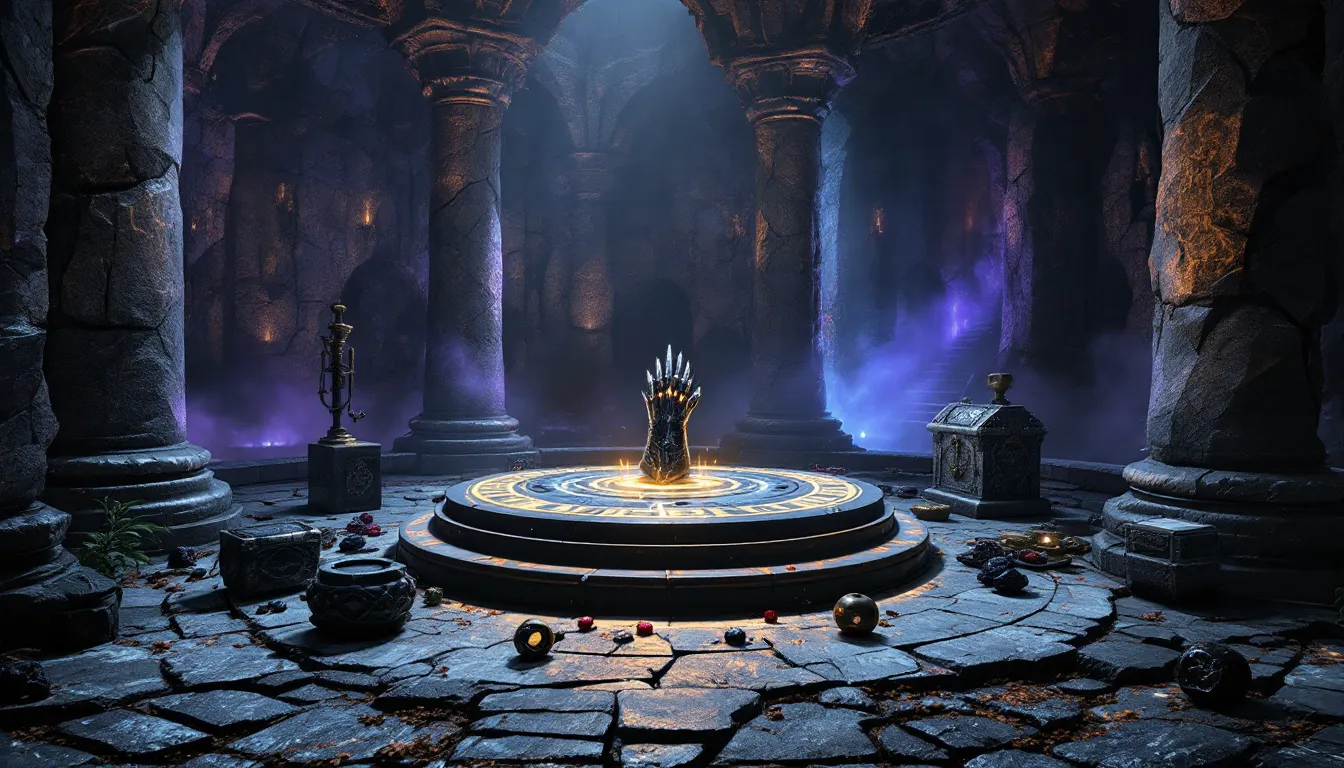
You’ll pass through The Midden (the upper level) and eventually descend into The Midden Dark, a lower section with more skeletal remains and alchemy ingredients scattered around. Keep heading deeper until you reach a large chamber with a glowing, circular platform surrounded by stone pillars. That’s the Atronach Forge.
Next to the forge, you’ll see a pull chain and a small stone offering box. The offering box is where you place your ingredients. The chain activates the forge. There’s also a Conjurer’s Altar nearby, which is unrelated to the forge but useful if you’re enchanting.
If you’re struggling to navigate, follow the quest marker during “Conjuration Ritual Spell” (more on that later), it leads directly to the forge.
How the Atronach Forge Works
Basic Crafting Mechanics
Crafting at the Atronach Forge is simple in concept but unforgiving in execution. Here’s the process:
- Gather your ingredients according to a specific recipe.
- Place all required items into the offering box beside the forge.
- Pull the lever on the nearby chain.
- If the recipe is correct, your item materializes on the forge platform. If not, your ingredients are consumed and nothing happens.
There’s no in-game recipe list. You either need to experiment (expensive and tedious), consult a guide, or stumble onto recipes through books like the Atronach Forge Manual found in The Midden. The manual only covers a handful of basic recipes, so external resources, whether from community databases or fansites, are practically mandatory for serious forging.
Most recipes require a mix of soul gems, Daedra hearts, ores, ingots, and crafting materials like leather strips or iron ingots. Higher-tier items demand filled soul gems (usually greater or grand) and rarer components.
The Role of the Sigil Stone
The Sigil Stone is a permanent upgrade to the forge. Once you place it in the pedestal near the forge (during or after the Conjuration Ritual Spell quest), it remains there forever, unlocking advanced recipes.
Without the Sigil Stone, you can summon atronachs and craft a few low-level spell tomes. With it, you unlock the full Daedric arsenal: every Daedric weapon, every Daedric armor piece, and some unique conjuration tomes.
The Sigil Stone doesn’t get consumed. It’s a one-time installation that permanently enhances the forge for the rest of your playthrough. Think of it as unlocking hard mode recipes, except in this case, hard mode is where all the good loot lives.
Essential Atronach Forge Recipes
Here’s a curated list of skyrim atronach forge recipes you’ll actually use, organized by category. Full recipe lists are available on fan wikis, but these are the highlights.
Summoning Atronachs
You can summon temporary atronachs directly onto the forge platform. They last 60 seconds and will fight for you.
- Flame Atronach: 1 Fire Salts, 1 Ruby, 1 Corundum Ore
- Frost Atronach: 1 Frost Salts, 1 Sapphire, 1 Refined Malachite
- Storm Atronach: 1 Void Salts, 1 Amethyst, 1 Refined Moonstone
These are situational. Summoning an atronach at the forge isn’t practical mid-combat, but it’s a fun way to test the mechanics or clear out nearby enemies if you’re low on magicka.
Crafting Daedric Weapons and Armor
This is the main event. Every Daedric weapon and armor piece can be crafted here if you have the Sigil Stone installed. Each recipe requires a Daedra Heart, a Centurion Dynamo Core, an Ebony Ingot, and a filled Greater Soul Gem or Grand Soul Gem.
Examples:
- Daedric Sword: 1 Ebony Ingot, 1 Daedra Heart, 1 Centurion Dynamo Core, 1 filled Greater/Grand Soul Gem (Sigil Stone required)
- Daedric Helmet: 1 Ebony Ingot, 1 Daedra Heart, 1 Centurion Dynamo Core, 1 filled Greater Soul Gem (Sigil Stone required)
- Daedric Bow: Same recipe structure
The value here is obvious: you can craft Daedric gear without leveling Smithing to 90 or unlocking the Daedric Smithing perk. Players focusing on building their dream home might also appreciate the aesthetic, Daedric armor makes for excellent display pieces on weapon racks and mannequins.
Centurion Dynamo Cores are the limiting factor. You get them from Dwarven Centurions, which means farming Dwarven ruins. Daedra Hearts are also rare but can be purchased from alchemists (especially Enthir at the College) or looted from Daedra enemies.
Creating Spell Tomes
The forge can produce a limited selection of conjuration spell tomes, including some that are otherwise rare or expensive.
- Conjure Flame Atronach: 1 Fire Salts, 1 Ruined Book, 1 Leather Strips
- Conjure Dremora Lord (Sigil Stone required): 1 Daedra Heart, 1 Ebony Ingot, 1 Skull, 1 filled Grand Soul Gem
The Dremora Lord tome is particularly valuable since it’s normally only available after completing “The Black Star” or purchased from Phinis Gestor at high Conjuration skill. Crafting it here bypasses that requirement entirely.
How to Obtain the Sigil Stone
The Sigil Stone is the key to unlocking Daedric crafting. Without it, the forge is barely worth the trek to The Midden.
Completing the Conjuration Ritual Spell Quest
To get the Sigil Stone, you need to complete the Conjuration Ritual Spell quest. Here’s how:
- Reach Conjuration skill 90. No shortcuts here, you need to grind Conjuration by casting summon spells, raising zombies, or soul trapping enemies.
- Speak to Phinis Gestor at the College of Winterhold. He’s the Conjuration trainer and hangs out in the Hall of Countenance. He’ll give you the quest.
- Travel to specific locations and summon an Unbound Dremora. Phinis gives you a summoning spell. Cast it at each marked location (there are four total, scattered across Skyrim). Each Dremora will fight you. Defeat them, and they’ll drop a Sigil Stone piece or other quest item.
- Return to Phinis, who will direct you to place the Sigil Stone in the Atronach Forge.
Once the Sigil Stone is installed in the pedestal beside the forge, it’s permanent. You don’t need to re-do the quest on subsequent characters, but you do need to repeat it for each new playthrough.
The quest is straightforward but requires fast travel and combat readiness. The Unbound Dremora hit hard, so bring healing potions or a follower. It’s worth the effort, detailed walkthroughs cover the exact spawn locations if you get stuck.
Advanced Crafting Strategies and Tips
Efficient Material Gathering
Daedra Hearts are the bottleneck for most Daedric recipes. Here’s where to get them:
- Enthir at the College of Winterhold restocks 2 Daedra Hearts every 48 in-game hours. Buy them on cooldown.
- Babette at the Dark Brotherhood Sanctuary sells them if you’ve joined the faction.
- Dremora enemies drop them occasionally. Mehrunes’ Shrine and the Shrine of Azura sometimes spawn Dremora.
- The Black Star quest rewards a reusable grand soul gem, which indirectly helps by reducing soul gem costs.
Centurion Dynamo Cores come from Dwarven Centurions. Farm these ruins efficiently:
- Mzulft (required for College questline)
- Nchuand-Zel (beneath Markarth)
- Avanchnzel (southwest of Riften)
Each Centurion drops one Dynamo Core. They respawn after 30 in-game days, so mark your calendar if you’re crafting multiple pieces.
Soul Gems: Keep a weapon enchanted with Soul Trap and filled Grand Soul Gems in stock. Mammoths and high-level bandits fill Grand Soul Gems quickly.
Maximizing Value from Daedric Items
Daedric gear crafted at the forge is unenchanted. This means:
- You can enchant it yourself for custom bonuses.
- Base stats are identical to Daedric items found or smithed elsewhere.
- You can improve Daedric items at a grindstone or workbench with Ebony Ingots, even without Smithing perks (though perks help massively).
If you’re crafting for profit, Daedric weapons and armor sell for 1,000+ gold each. But, the material cost (Daedra Hearts alone cost 500+ gold) means the profit margin is thin unless you’re looting all your ingredients.
Common Mistakes to Avoid
Forgetting the Sigil Stone. Seriously, don’t bother with the forge until you have it. The basic recipes aren’t worth the ingredient cost.
Using the wrong soul gem size. Many recipes specify Greater or Grand Soul Gems. Petty and Lesser gems won’t work, and the forge will consume them anyway. Double-check before pulling the lever.
Not filling soul gems. The forge requires filled soul gems for most Daedric recipes. Empty gems are useless here.
Wasting Daedra Hearts on experimentation. Daedra Hearts are expensive and rare. Don’t guess recipes. Use a guide or the in-game Atronach Forge Manual for confirmed recipes.
Ignoring carry weight. Daedric armor is heavy. Each piece weighs significantly more than steel or even ebony. If you’re crafting a full set, make multiple trips or bring a follower to haul it back to storage.
Expecting the forge to replace smithing entirely. The forge is a supplement, not a replacement. You still need traditional smithing to improve Daedric gear to Legendary quality. Without the Daedric Smithing perk and 100 Smithing, your forge-crafted items will underperform against properly upgraded gear.
Is the Atronach Forge Worth Using?
Pros and Cons Compared to Traditional Smithing
Pros:
- No Smithing skill required. You can craft Daedric gear at level 1 if you have the materials and Sigil Stone.
- Bypasses perk requirements. Traditional Daedric Smithing requires the Daedric Smithing perk (Smithing 90) plus several prerequisite perks. The forge skips all of that.
- Access to rare spell tomes. Conjure Dremora Lord and other high-level tomes are available without grinding Conjuration to 100 or completing faction quests.
- Roleplaying flavor. If you’re running a pure mage or conjurer, smithing feels out of character. The forge fits thematically.
Cons:
- Expensive material costs. Daedra Hearts and Centurion Dynamo Cores are rare and costly. Traditional smithing only requires Ebony Ingots and leather strips.
- Requires Conjuration 90 for the Sigil Stone. If you’re not already leveling Conjuration, this is a huge time sink.
- Items are unenchanted and base-level. You still need Enchanting to make them useful and Smithing to improve them. The forge doesn’t save you from other grinds.
- Limited recipe variety. The vanilla forge only has a couple dozen recipes. Modded forges (especially on PC) offer far more flexibility.
Best Builds and Playstyles for the Forge
The Atronach Forge is ideal for:
- Pure Conjurers: If you’re already leveling Conjuration to 90+, the Sigil Stone quest is a natural progression. The spell tomes and Daedric weapons complement a summoner build perfectly.
- Mage characters avoiding Smithing: The forge lets you acquire endgame gear without investing in Smithing perks or grinding hundreds of iron daggers.
- Players who want Daedric aesthetics early: If you love the look of Daedric armor but don’t want to wait until level 40+, the forge provides a shortcut (assuming you can farm the materials).
- Roleplayers and lore enthusiasts: The forge ties directly into Daedric lore and the College of Winterhold questline. It feels more immersive than conventional crafting for certain character concepts.
It’s not ideal for:
- Smithing-focused characters: If you’re already running a Smithing/Enchanting loop for crafting Legendary gear, the forge is redundant.
- Low-level players: You won’t have access to Conjuration 90, Daedra Hearts, or Centurion Dynamo Cores until mid-to-late game.
- Min-maxers optimizing DPS: The time spent farming forge materials could be spent grinding Smithing and Enchanting for objectively better gear.
Conclusion
The Atronach Forge is one of Skyrim’s most interesting, and underused, crafting systems. It’s not a shortcut to godhood, but it’s a legitimate alternative path for players who want Daedric gear without grinding Smithing perks or waiting for random loot drops. The Sigil Stone is non-negotiable: without it, the forge is barely worth visiting. But once you’ve unlocked it, you gain access to a crafting station that rewards preparation, resource management, and a bit of arcane knowledge.
Is it faster than traditional smithing? Not really. Is it cheaper? Definitely not. But it’s thematically rich, mechanically unique, and satisfying in a way that hammering out iron daggers at a workbench will never be. If you’re running a conjurer or mage build, the forge is a no-brainer. If you’re a sword-and-board warrior who’s never touched a summon spell, you can safely skip it. Either way, it’s one more layer of depth in a game that’s still rewarding exploration and experimentation fifteen years after launch.


